Diamonds
A stone for the hand, not for the window
India cuts the world’s diamonds and then, at home, buries too many of them under the occasion. The piece you should own is the one you will wear on an ordinary night.
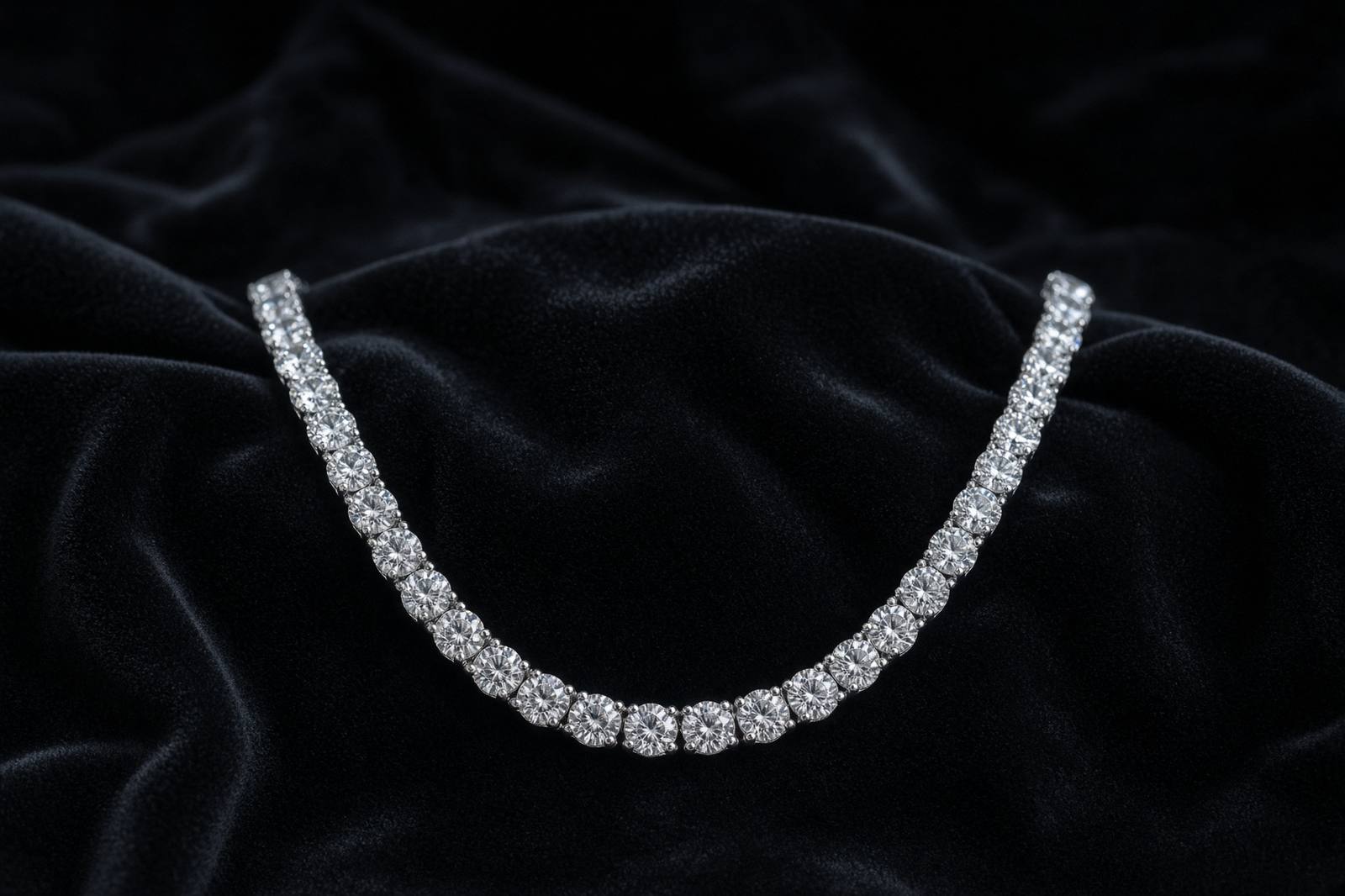
Surat’s workshops are the reason a diamond on a hand in Mumbai, Paris or New York exists in the quantity it does. That industrial fact does not make every stone in a wedding trousseau a good object. Indian high-net-worth families already know how to buy for a wedding. They are less practised, some of them, at buying a jewel they will still put on in March, when nobody is counting carats across a mandap. CAWDN’s interest is the second purchase. The first has enough advisers.
Buy from a house that will write down the stone: weight, colour, clarity, the setting, the invoice. Keep that paper. A family jeweller who has known you for years is a blessing if the paper exists and a risk if the relationship is the only record. Have one serious piece — a rivière, a pair of earclips, a ring that is not a costume for a single night — made or chosen to be worn against ordinary clothes. If it only works with a lehenga and a spotlight, it is wardrobe for an event, and events end.
The market for diamonds as a ‘store of value’ is a different object, and it is dealt with, carefully, in the wealth section. Do not let a salesman collapse the two in one sitting. The stone you wear is allowed to be beautiful and illiquid. The parcel you are told will appreciate is a trade, and most readers should not be in that trade. Saying no to the second pitch is how you leave the shop with the first thing, which was the one you wanted.
On the body, in the city
Wear is a security question in Mumbai, Delhi, Johannesburg, Lagos. That is not dramatic; it is the reason a serious piece spends some of its life in a bank vault and comes out for rooms that can hold it. Those rooms are the clubs, the dinners, the houses of people you know. They are not the restaurant you chose because it is new. Insurance must match the real replacement cost, not the flattering number from the person who sold it. Review it when you add a stone, not when something has already gone missing.
Men are not exempt. A small pair of cufflinks, a plain dress watch that is not trying to be jewellery, perhaps nothing at all. The reader who piles a chain, a watch and a ring into one entrance has confused a wedding with a Tuesday. Our pages will show women’s jewels more often because that is where the craft is, and we will not pretend a diamond on a man is automatically modern. It is usually just louder.
The standard
If you would not wear it to a dinner with no photographers, you have bought a prop for a night you have already had.
CAWDN will not rank solitaires and will not run a bridal supplement. The India edition covers diamonds because our reader buys them, wears them, and is entitled to a standard that is not the shop’s. One serious jewel. Paper in the drawer. A vault for the nights that do not deserve it. The same standard will travel when we write for Dhaka, for Jakarta, for Lagos: occasion is not an excuse for a bad stone, and a good stone does not need an occasion to justify being owned.